

Knowledge hub
The basics of moving well.
Plain-language explanations of how a home movement routine is put together, what equipment actually does, and how to keep your space safe.
1. A session, in four parts
You do not need a complicated plan. A comfortable home session usually has four parts: a short warm-up to ease into movement, the main activity at your own pace, a slower cool-down, and then rest with some water. The order matters more than the duration. Starting gently and finishing gently makes the whole routine easier to repeat tomorrow.
Warm-ups can be as simple as a few minutes of easy walking or gentle arm circles. Cool-downs work the same way in reverse: slower movement, then a pause. Our article on a ten-minute routine gives a concrete example you can adapt.
Read: a 10-minute routine2. How vibration platforms work
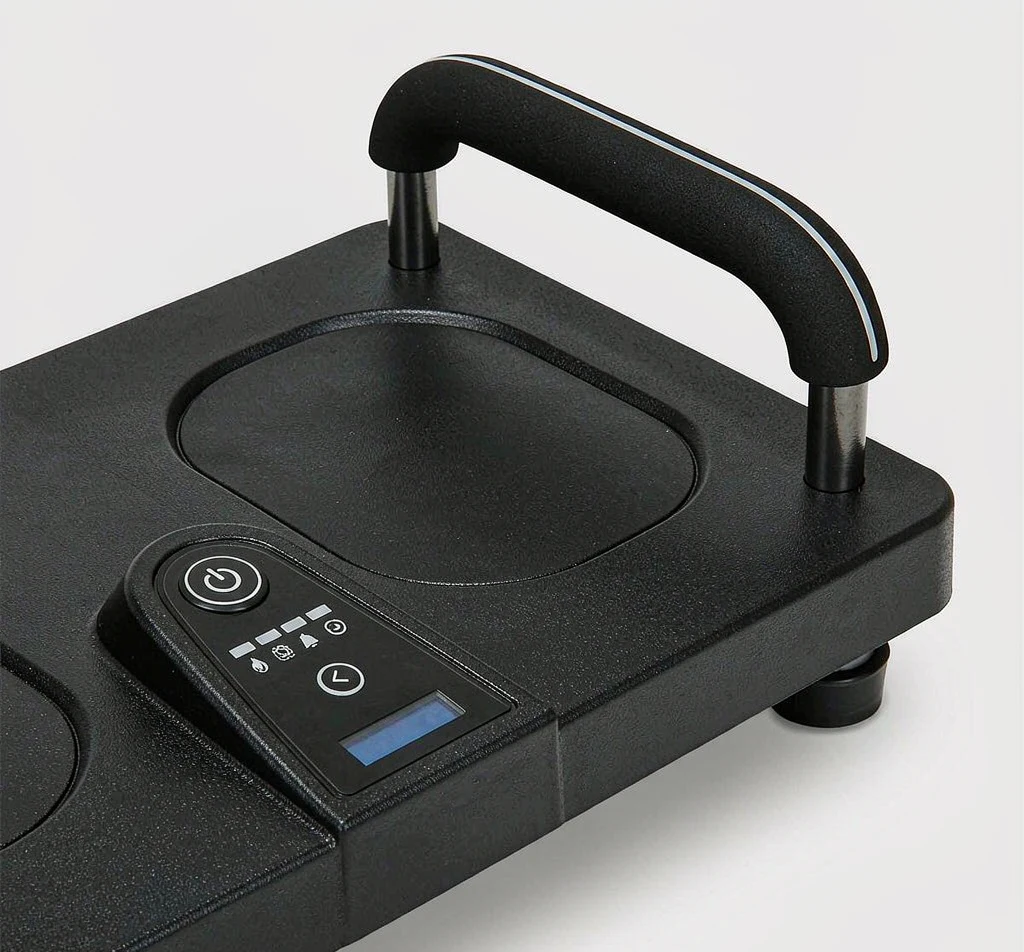
A vibration platform is a motorised plate that moves in a repeating pattern — up and down, side to side, or a combination of both. You stand, sit or hold a light position on the plate while it moves. The pattern, speed and amplitude are set on the control panel, usually with a remote.
What varies between models is the number and type of motors, the range of speed settings, the size of the plate, and the weight capacity. Those are the numbers worth comparing. Marketing phrases are far less useful than a specification table.
3. A safe home space
Most home equipment problems are really space problems. Before a session, check that the floor is level and non-slip, that there is clear room on every side of the machine, that cables are out of the way, and that lighting is good enough to read the controls. A folded mat and a clear 60 cm border around the equipment solve most of these at once.
4. Reading the numbers
| On the label | What it actually tells you |
|---|---|
| Weight capacity | The maximum user weight the manufacturer specifies. Always check this before comparing looks or price. |
| Product weight (N.W. / G.W.) | Net weight of the machine and gross weight including packaging. The second figure matters for delivery and for moving the item into place. |
| Product dimensions | Assembled footprint. Compare it with the floor area you measured, not with the room size. |
| Power / voltage | What the machine needs from a wall socket, and whether a converter is required in your country. |
| Noise level | Relevant in apartments and shared homes. A quieter motor is often more useful than an extra program. |
5. Care and storage
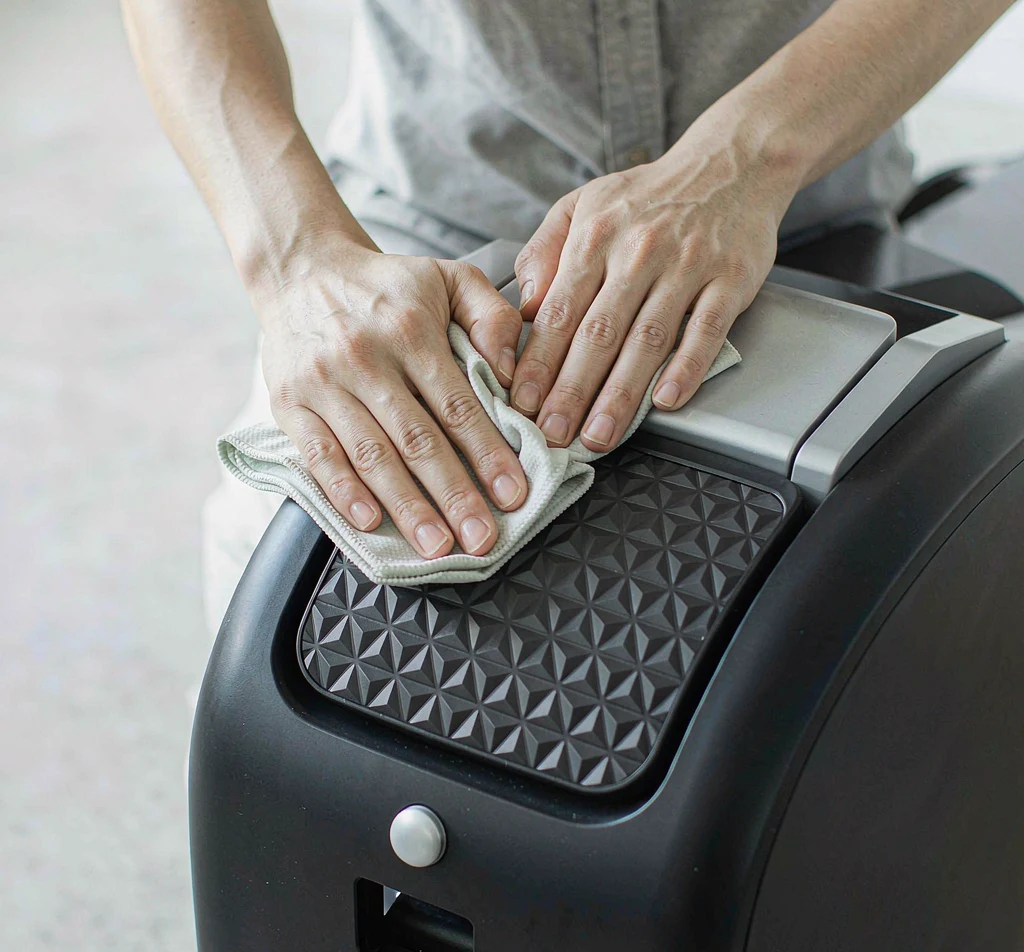
Wipe down contact surfaces after use with a soft, slightly damp cloth, let them dry, and store the machine away from direct sunlight and damp. Check cables, bolts and feet periodically. A two-minute clean after each session keeps the equipment pleasant to use and makes wear easy to spot early.
6. Rest and consistency
Short, repeatable sessions tend to fit real life better than occasional long ones. Hydration, a regular time of day, and a clear place to put the equipment all make a routine easier to keep. The aim is a comfortable habit, not a personal record.